
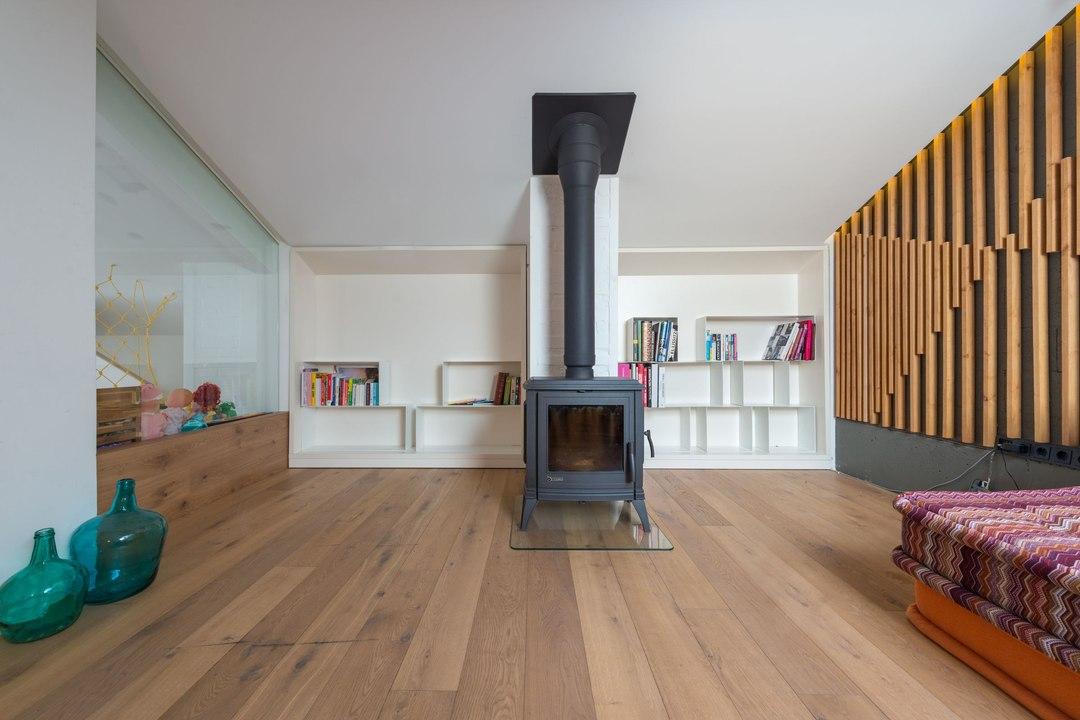
Wood Stove Repair in Laguna Woods for Stoves That Leak, Smoke or Have Moved
Where Has the Chimney Moved?
Tell us the street, the kind of chimney and what looks different since the last shake. Lombard calls back to set a visit.
Scope of This Job
A heavy steel stove can walk on its hearth in a strong jolt and pull its connector pipe out of the wall or ceiling. We confirm that the stove sits where it should, reseat or replace the connector, renew door and glass gaskets, and look at the baffle and any catalytic part for warping or cracks. Every part is matched to the stove and priced before we order it.
A Stove Is a Sealed Box, Until It Is Not
Every setting on a modern stove assumes the only air reaching the fire comes through the intake you adjust. Leaks break that assumption. The woven seal pressed into the door channel goes stiff and flat after a few seasons, and once it does, air leaks in around the edges and the fire burns faster than the setting allows. Owners notice it as a stove that eats wood, will not hold a fire overnight, or glows red at the top. Firebrick inside the box cracks in time, and a broken brick lets heat reach steel that was never meant to take it directly. The baffle at the top of the box, which forces the gases to stay in the fire longer before leaving, warps or crumbles, and the stove starts to smoke and dirty the glass. Each part is replaceable, and replacing them is usually far cheaper than a new stove. We check the door seal with a paper test, inspect the bricks and baffle, and replace what has worn, using parts made for your model.
Glass is its own topic. Stove glass is a special ceramic, not window glass, and a cracked panel must be replaced with the right material before the stove is used again. We cut or order the panel to size, set it with a new gasket and check that the door closes evenly. If the door frame or hinge has warped, we tell you whether it can be straightened or needs a replacement part. The latch, the hinges and the gasket channel are checked at the same time, since a door that has sagged on its hinges will chew through a new seal within a season. We also look at the air controls, because a slider or knob that has seized changes how the stove burns as much as any leak does. When the stove is back together, we run a small fire and watch how it draws, how the glass stays and whether the door holds.
When the Ground Moves the Stove
A freestanding stove is heavy, and in a shake it can slide or rock on its hearth pad. The stove might come to rest only an inch from where it started, but its connector pipe, fitted to the stove at the bottom and the wall or ceiling at the top, can pull apart at a joint or tilt off its seat. A pipe joint that has opened lets smoke and sparks out into the room. A stove that has moved closer to a wall may no longer meet the required gap to combustible material. After any shake you felt clearly, check that the stove is where it was. If it is not, or if the pipe looks out of line, keep it unlit until it has been looked at. On a repair visit we reset the stove, check its legs and pad, refit and fasten the pipe sections, and confirm the clearances against the stove's label.
We also look up the chimney the stove vents into, because a stove that ran hot with a leaking door can leave heavy deposits there. Repairs are priced once the worn parts are identified, and you approve the figure before we order anything. If the stove is old enough that parts have stopped being made, or the body has cracked, we explain what a replacement would involve instead. Book through the contact page and include the brand cast on the stove, what it is doing and whether it moved in a recent shake. If the room around the stove has changed, for example new paneling or furniture moved close, say that as well, since the required gaps depend on what surrounds the stove now. Any changes we suggest to the pad or the wall protection are listed with their cost.
How Lombard Chimney Care Works a Job
Movement Checked First
Cracks, gaps and lean looked at before any fix
Camera Where It Counts
Video of the flue when a visual look falls short
Scope in Writing
The work and its price written down before it starts
Photo Record Kept
Pictures of what we found, yours to keep
Where Lombard offers wood stove repair
Choose a city for notes on its housing stock, its ground and its weather, and on how those shape the work on its chimneys.
CA
Wood Stove Repair in Laguna Woods
With detached houses at a mere 7%, exterior chimney work is routed through the community associations. Our Level 2 report is written so a resident and an association board can both read what shifted and where.
Open city pageCA
Wood Stove Repair in Laguna Hills
Nellie Gail Ranch puts custom and semi-custom homes beside its bridle trails, while tract streets hold stucco and tile. On either, our inspection follows the chimney from firebox to crown, looking for the cracks a shake leaves behind.
Open city pageCA
Wood Stove Repair in Mission Viejo
Masonry fireplaces turn up mainly in the early and custom homes; most others run factory-built metal or gas. On brick we look for a stack leaning off the wall, and on metal for flue joints that shaking has pulled apart.
Open city pageCA
Wood Stove Repair in Costa Mesa
One brick chimney per house was the postwar tract habit here, often with steel inside and now decades old. Steel that rusts within mortar swells and splits it, and a Level 2 camera run is how we look for that before the next shake does.
Open city pageMore From Lombard
Chimney Sweep
Flue brushing that doubles as a structural look, with cracked tiles or loose mortar noted while the liner is bare.
Details →Chimney Inspection
A visual Level 1 check under NFPA 211 of every reachable part, read for cracks, lean and separation.
Details →Chimney Repair
General repair for stacks that have cracked, loosened or let water in, with the cause found before the fix.
Details →Fireplace Inspection
The room side of the system examined for heat damage and quake cracks before the next fire is lit.
Details →Fireplace Repair
Cracked firebrick, loose hearths and failed joints put right so the firebox holds heat safely again.
Details →Chimney Level 2 Inspection
Camera inspection of the whole flue plus attic and roof checks, the level called for after shaking, a sale or a fire.
Details →Chimney Cap Installation
Fitted caps that keep water and animals out, anchored so a jolt or a gust does not dislodge them.
Details →Chimney Flashing Repair
Metal at the roofline rebuilt where shaking or age has pulled it loose and water now runs behind it.
Details →Chimney Masonry Repair
Open joints, cracked brick and loose stone repaired with mortar matched to the age and strength of the chimney.
Details →Chimney Rebuilds
Chimneys taken down past the damaged section and rebuilt with steel, anchors and a new crown.
Details →Fireplace Cleaning
Firebox, doors and smoke stains cleaned, with a look at the brick behind the soot for cracks.
Details →Gas Fireplace Cleaning
Burner, logs, glass and vent of a gas unit cleaned, with the vent run checked for joints shaken apart.
Details →Gas Fireplace Repair
Gas units that fail to start, drop out or burn poorly, traced to the failed part and repaired.
Details →Fireplace Remodel
New surrounds, hearths and fireboxes planned around clearances and the weight a quake puts on heavy stone.
Details →Fireplace Inserts
Closed wood or gas inserts with a full-height liner, a good fit for masonry flues with cracked tiles.
Details →Pellet Stove Repair
Pellet units diagnosed part by part, with the vent run checked for joints loosened by movement.
Details →Gas Logs
Gas log sets fitted to an existing firebox once the chimney behind it has been confirmed fit for use.
Details →Chimney Seismic Retrofit
Bracing, anchors or a lighter rebuild for older brick stacks, planned around how this chimney meets the house.
Details →Chimney Crown Repair
Crowns cracked by shaking, heat or a thin original pour, restored so water stops reaching the brick below.
Details →Dryer Vent Cleaning
Lint cleared from the whole duct run, with joints and the wall exit checked after shaking.
Details →Chimney Liner Installation
A stainless liner inside a flue whose clay tiles cracked or shifted, so exhaust stays contained.
Details →Chimney Leak Repair
Water traced to its entry point, often a crack or flashing gap opened by movement, then stopped.
Details →Chimney Waterproofing
A breathable sealer applied to repaired masonry so rain stays out of joints that movement has stressed.
Details →Chimney Damper Repair
Dampers jammed or knocked out of line by movement, freed, reset or replaced with a tighter seal.
Details →Chimney Chase Cover
Rusted or pooled chase tops on factory-built chimneys replaced with a custom stainless cover.
Details →