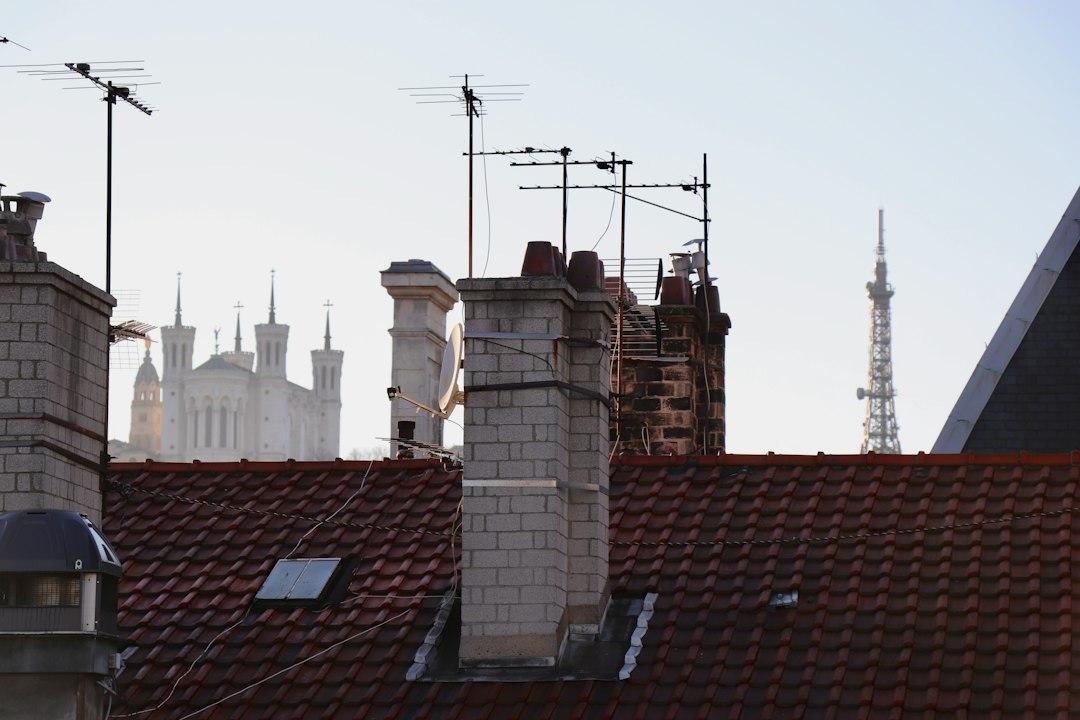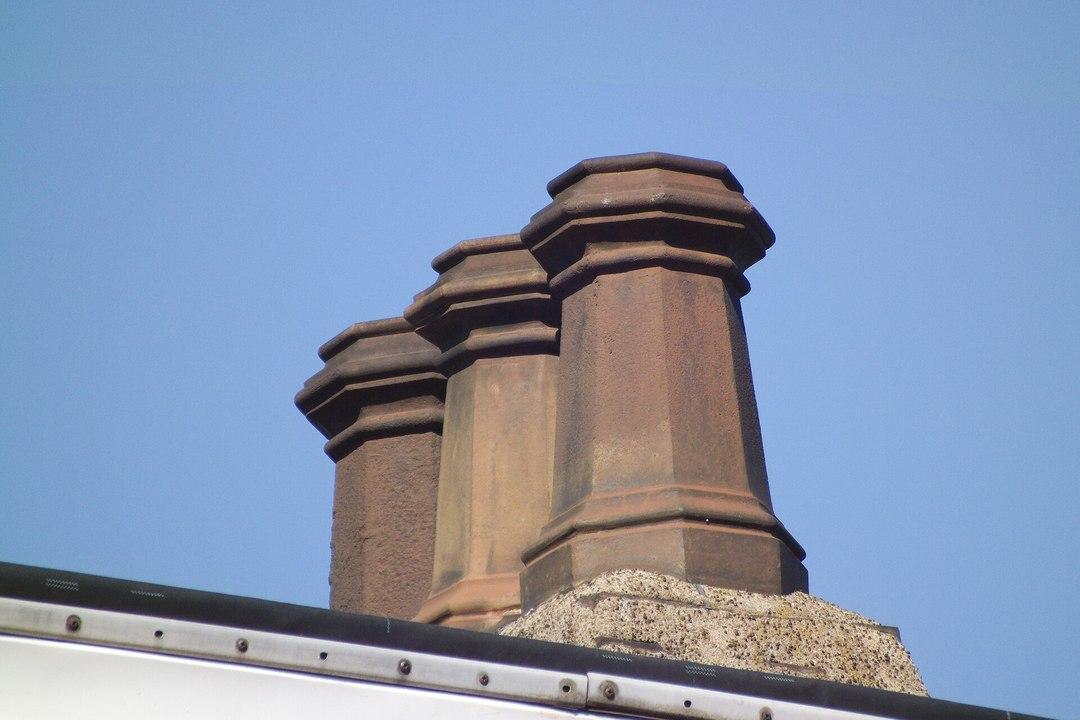
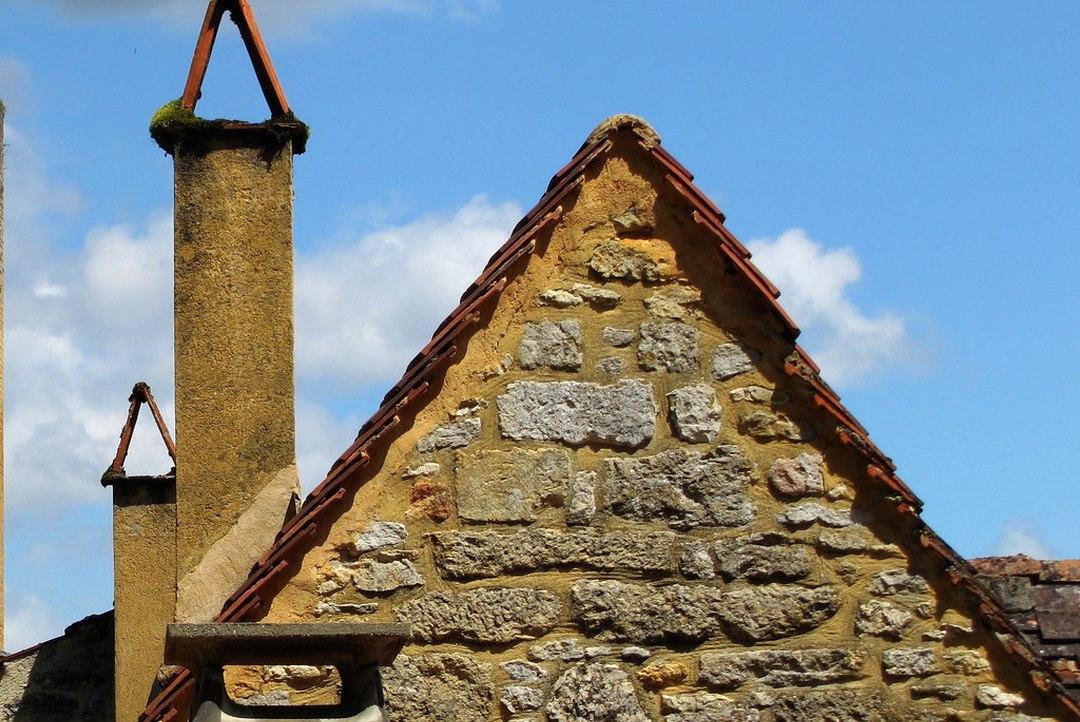
The ground stops moving, the pictures go back on the wall, and the chimney looks just as it did yesterday. That last part is the trouble. Most of what shaking does to a masonry chimney happens inside the flue or at joints you cannot see from the yard. This post explains why owners in Laguna Woods and across south Orange County book a camera inspection after a quake they clearly felt, what it records, and what it costs.
What a shake does to brick and tile
A chimney is a tall, stiff column on its own footing. Your house is a wood frame that flexes. When the ground moves, the two sway at different speeds and in different directions. The places where they meet, at the roofline, in the attic and at the metal ties between them, take the strain.
Inside, the flue is lined with clay tiles stacked one on another with mortar between them. Clay is brittle. As the column sways, tiles knock together, joints open and corners chip. A tile can crack straight through and still look whole from the firebox, because the crack is fifteen feet up and the inside is black with soot.
Outside, the signs we see most are:
- Cracks in the mortar at or just above the roofline
- A crown with a new crack running out from the flue
- A thin gap opening between the stack and the siding
- Bricks at the top that have shifted or worked loose
You may spot one of these from the ground. You will not spot a cracked liner from anywhere but inside it.
Why the flashlight look falls short
A Level 1 inspection covers the parts within easy reach: firebox, damper, as much of the flue as a light shows, and the outside of the stack. It suits a chimney in routine use with nothing new having happened to it. A quake is something new.
NFPA 211, the standard most chimney inspectors work from, lists events like a quake among the reasons to step up to Level 2. The difference is the camera. It runs the full length of the flue and records every joint, so a hairline split or a missing piece of mortar shows on screen and in the saved footage.
Level 2 also takes in the chimney in the attic and from the roof, where those can be reached. That matters after shaking, because the attic is where you see whether the stack has shifted against the framing.
What you receive
After the visit you get a written report with:
- Stills from the footage for each finding, labelled by height in the flue
- Photos of the crown, the top courses and the joint with the roof
- What each finding means for the fireplace: fine to use, keep watching, or no fires until repaired
- A note on anything we could not reach
If repairs are needed, a written scope follows. If the chimney came through intact, you have dated footage that says so, which is handy later for a sale or an insurance question.
What it costs and what decides the next move
The camera inspection is $390 per chimney. A visual Level 1 is $165, and it is the right choice in ordinary years. After a quake you felt clearly, the camera is the one that answers the question.
What comes after depends on the footage:
- Nothing found. Burn as normal and file the report.
- Open joints or minor liner cracks. Often a relining job; see Relining a Quake-Cracked Flue.
- A cracked crown or loose top courses. A crown repair or a partial rebuild of the stack.
- A stack that has moved off the house. Bracing or rebuilding, compared in Seismic Bracing or a Rebuild?.
Book the post-quake camera inspection. Say what you have noticed since the shaking and whether the fireplace burns wood or gas, and we set up the visit.
Should you use the fireplace meanwhile?
If you see fresh cracks outside, bricks that have moved, or a gap at the wall, hold off on fires until the chimney has been looked at. Once a liner cracks, smoke and heat can get through to the masonry and the wood framing beside it, the very thing a liner is meant to block.
Gas fireplaces are not off the hook. Their vent often runs up an old masonry flue, and a crack there can let exhaust go where it should not. Check that the carbon monoxide alarm near the bedrooms is working while you wait for the visit.
When owners usually book
- After shaking strong enough to knock things off shelves
- Before listing a house that has been through several quakes since its last camera inspection
- When a buyer's home inspector writes that the chimney needs a specialist
- When an insurer asks for documentation of damage
For the sale side, read Listing a Home With a Brick Chimney. For claims, our insurance claims page lists what adjusters look for.
A word on aftershocks
Aftershocks can finish what the main shake started. It can make sense to let the sequence settle before major brickwork, but the inspection itself does not need to wait. Footage taken now gives a baseline, so if a later shake does more harm, the difference is on record.
Book it
If your house in Laguna Woods shook and the chimney has not been looked at since, the camera visit is how you find out where things stand. Go to our contact page and tell us about the house; we arrange the inspection and send the report to you and anyone you name.
Want Your Own Chimney Checked?
Lombard Chimney Care works from Laguna Woods across Orange County. We look for movement, cracking and water first, record it in photos, and write the repair scope and price down before any work is agreed.